Some of my work:

Improving Income Capture
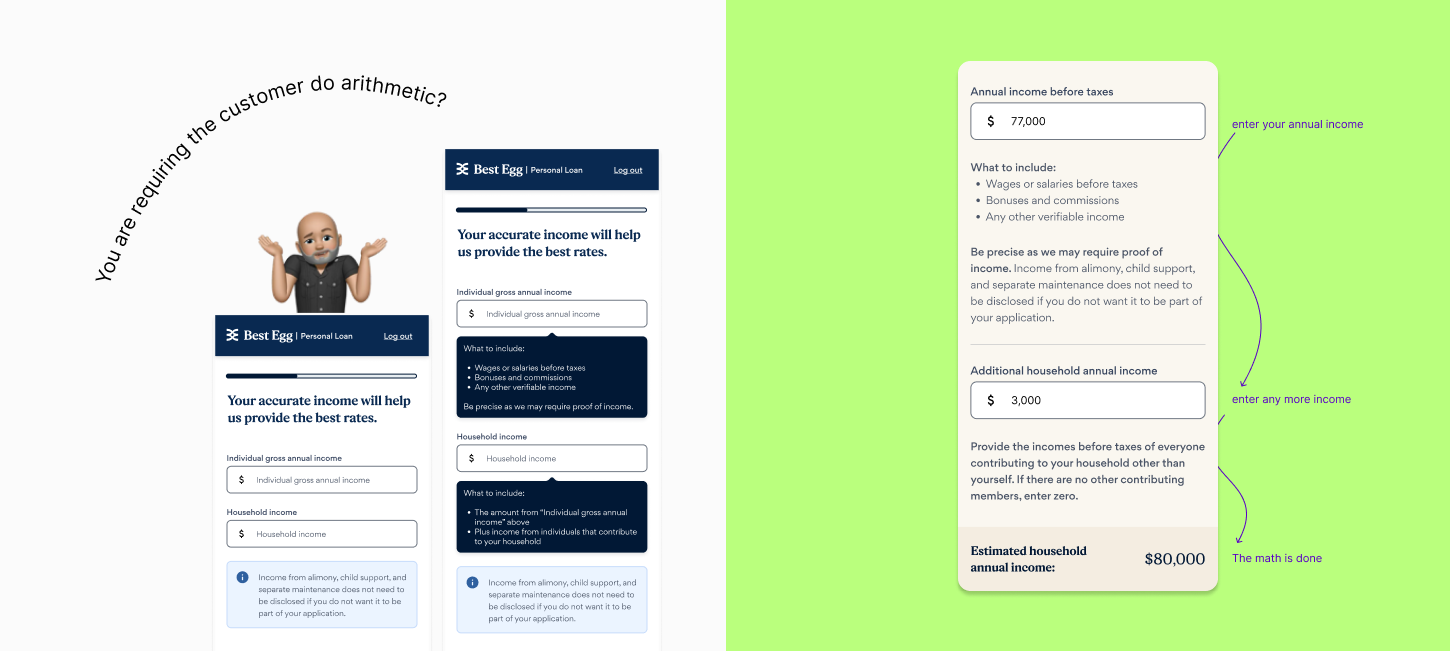
I realized the Best Egg income capture flow was essentially a math test in disguise, causing a 6% drop-off as users struggled to decode the difference between individual and household income. This friction left applicants feeling frustrated and anxious that a simple misunderstanding or manual calculation error would tank their entire loan approval.

To fix this, I led the team to redesign for an experience that was much more intuitive by swapping out confusing labels for plain-language instructions and introducing automated calculations to handle the heavy lifting for the user. The impact was immediate: the “Phase 1” launch delivered a 2.5% jump in application submissions and a 1.25% increase in funded offers.

+4.7M
Monthly funded dollars

+1.86%
Offer rate increase

+2.5%
Application submit rate

Providing smart repayment options
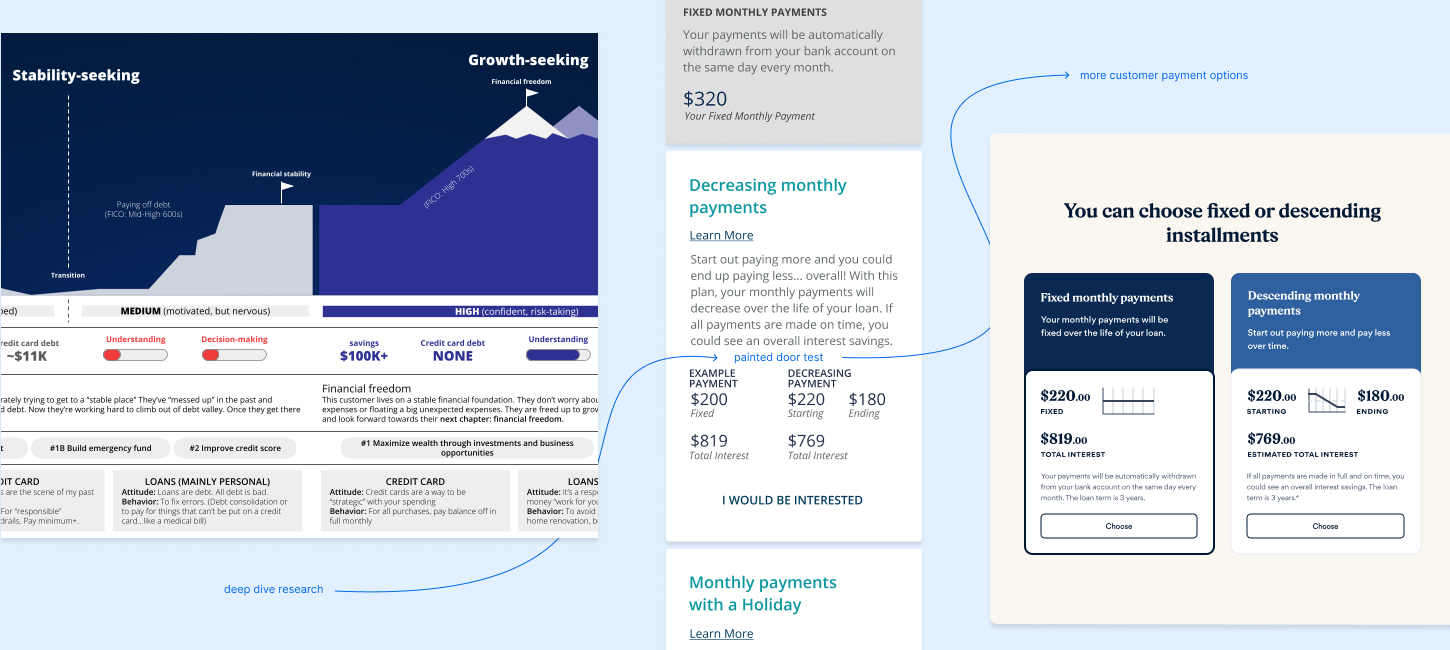
Feedback told us that our borrowers were feeling stuck because Best Egg’s loan products only offered a single static payment plan that didn’t fit everyone’s shifting financial reality. To fix this, we explored a “smart repayment” strategy that would give customers more autonomy without adding a bunch of regulatory headaches. We landed on two main concepts through research: “Decreasing Monthly Payments,” which builds early momentum by starting higher and dropping over time, and a “Payment Holiday” to let people skip a payment during tight spots like the end of the year.

The results from our live testing were huge. A “painted door” test showed that over 75% of users were interested in these flexible options over a standard fixed plan. When we officially A/B tested the descending payment model, we saw statistically significant wins across the board: a 1.58% bump in verification rates, a 1.18% increase in funded loans, and a massive 16-point jump in NPS. It proved that just giving people a sense of control and making their progress visible can completely change how they engage with their debt.

+2.12M
Monthly funded dollars

+1.18%
Offered-to-funded rate

+1.58%
Verification rate

+15
Rise in NPS

Rebranding for growth
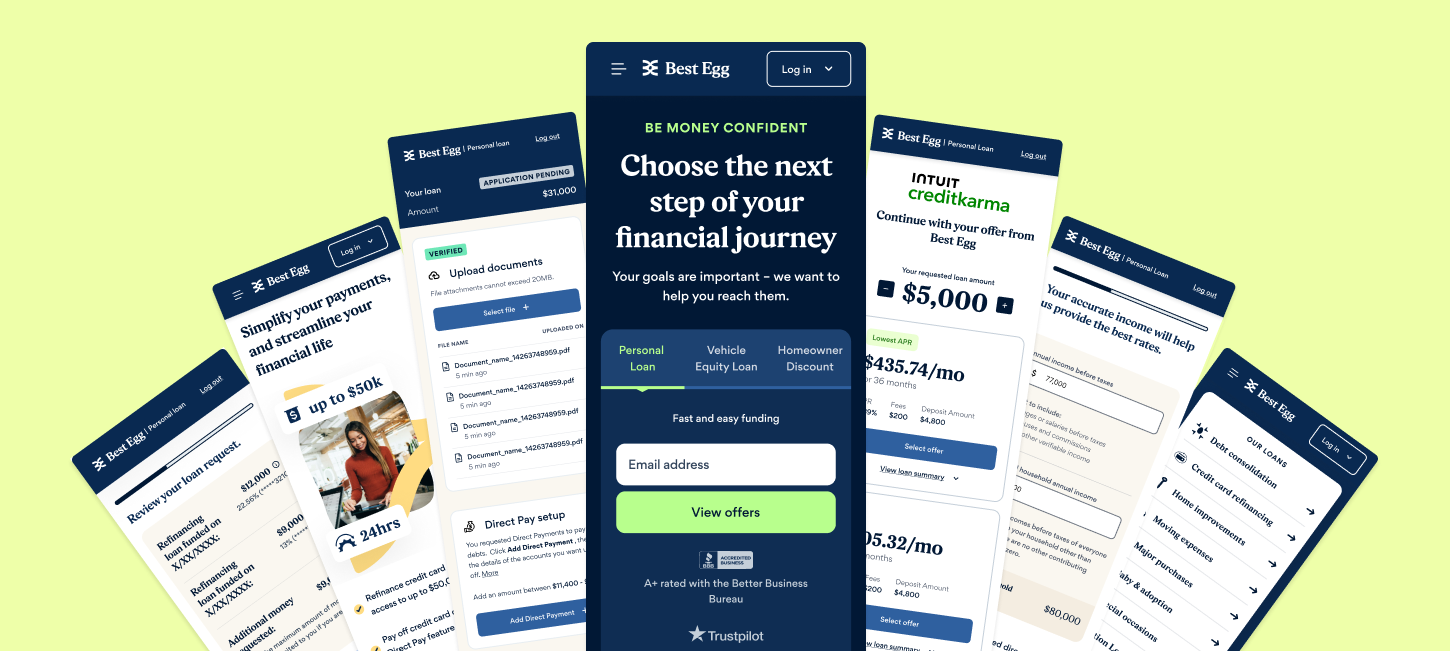
Best Egg’s legacy brand was aging and no longer kept pace with our expanding mission to provide broader financial wellness. Research showed that customers often felt judged or confused during high-stakes financial moments, so we needed to pivot from being just a lender to becoming a platform that actually inspires confidence. I led the design strategy for a complete systemic overhaul , directing a cross-functional team to redesign every customer touchpoint, including the marketing site, onboarding, verification, and servicing.

The core of the solution was building a modern, unified design system that prioritized accessibility and cross-team velocity. By aligning our product and messaging with a more inclusive, judgment-free tone, we were able to launch a cohesive experience across both web and mobile. The results were definitive: we saw a 16% lift in user trust scores, a drop in onboarding support calls, and overwhelmingly positive feedback from customers who now feel the platform is modern, safe, and human.

-3.6%
Reduced call volume

+16%
Rise in trust scores

92%
Design system adoption

“Kevin kept the team grounded and focused during the rebrand while his attention to detail and design sensibility made all the difference.”

Managing Director Brand Strategy and Operations
Best Egg

My Process


1.

Define with Design Rationale

Frame the challenge in terms of why it matters, connecting business objectives, user needs, and product goals. Gather context from stakeholders, existing data, and user research, and document the rationale for design decisions so the team understands the intent behind the direction.


2.

Explore, Prototype, and Validate

Generate conceptual approaches, even if they’re rough, to avoid tunnel vision.

Use low- to mid-fidelity prototypes to quickly test ideas with real or representative users, gathering feedback to reduce assumptions.


3.

Align and Iterate with Confidence

Share validated insights with cross-functional partners, aligning on trade-offs and next steps.

Continue refining the design based on feedback and evolving priorities, while ensuring each change ties back to the original design rationale.